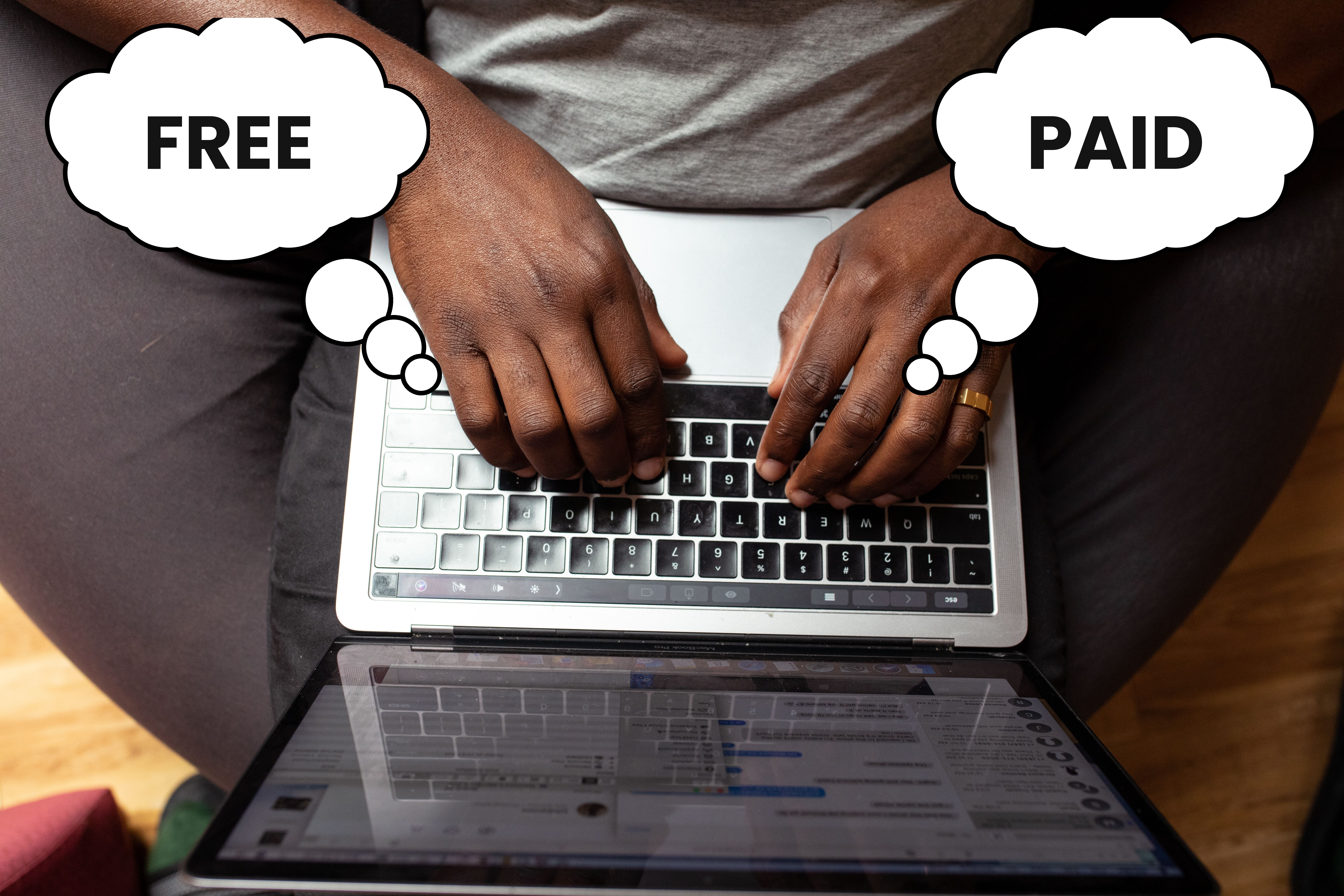
When money is tight, every cedi spent on a course has to justify itself, which makes taking the free version feel like the obviously safer choice. Sometimes it is. But free and paid courses are not the same product at different prices — they solve different problems, and confusing the two can waste more than it saves.
Why this question matters more in Ghana
This is not an argument for always paying. It is an honest look at what the data actually shows, so the choice gets made with real information rather than a guess.
The real difference is completion
Here is the number that matters most, and it rarely appears in course marketing: free courses have dramatically lower completion rates than paid ones.
The numbers
The reason is well documented. Paying creates a sunk-cost effect: once real money is on the line, learners are far more likely to push through the parts that get difficult or boring. Research on this specific effect has found that paying even a small fee for a certificate can multiply completion probability several times over compared with auditing the same course for free.
A free course you never finish is worth less than a modest paid one you complete.
What employers actually look at
Here is the part that surprises most people: the cost of the course is not what employers care about. What matters is the credibility of whoever issued the certificate, and whether the skill behind it is real and demonstrable.
A free certificate from a widely recognised name can outperform a paid certificate from an unknown platform in almost any hiring scenario. One recent workforce survey found 86 per cent of employers viewed non-degree certificates as valuable indicators of job readiness, while a separate industry survey found 64 per cent preferred candidates with paid, structured training over free course completions alone.
Those findings are not in conflict. Employers are not rewarding the price tag — they are rewarding structure, rigour and a recognisable name, qualities paid courses more often provide but which a handful of well-known free programmes also deliver.

Where each one earns its place
Free courses are good for
- Testing whether a subject genuinely interests you before spending anything
- Short, focused topics you can finish in a sitting or two
- Building basic vocabulary in a new area
- Well-known, brand-backed free programmes
Paid courses are worth it for
- Structured, project-based learning that builds a real portfolio
- A credential with enough backing to matter to an employer
- Staying accountable through the sunk-cost effect
- Career-changing skills you genuinely intend to use professionally
The inverse is just as useful to know. Free courses tend to fall down on anything that needs sustained motivation over weeks, on credentials an employer will actually recognise, and on deep skill built through real projects. Paid courses are poor value for casual exploration of a topic you are not sure you will stick with, or for very short one-off subjects that need no structure at all.
A simple way to decide
One rule captures most of what the research shows: use free courses to explore, use paid courses to commit. If you are not yet sure a subject suits you, a short free course is a low-risk way to find out. Once you know the direction and are ready to build a job-ready skill, a structured paid course with real projects and a recognised certificate tends to deliver a far better return on the time invested.
Getting started on Prodigee
Prodigee Edtech courses are built to sit firmly on the worth- committing-to side of this decision: structured, project-based, and designed so the certificate at the end reflects a skill you can demonstrate to an employer.
Ready to invest in a skill that sticks?
Course tracks built for real completion and real outcomes, not a certificate that sits unopened.
Browse coursesFrequently asked questions
- Are free online courses actually worth it?
- Yes, for exploration and early-stage learning. Free courses are a low-risk way to test whether a subject genuinely interests you. Where they fall short is completion and employer recognition — most free MOOCs see completion rates of only 5 to 15 percent.
- Do employers actually care whether a course was free or paid?
- Not directly. What employers care about is the credibility of the issuer and whether the skill is demonstrable. A free certificate from a recognised name can outperform a paid certificate from an unknown platform.
- Why do paid courses have higher completion rates?
- Paying creates a sunk-cost effect. Once money is on the line, learners are significantly more motivated to finish — research has found paying even a small fee can multiply completion probability several times over compared to a free version.
- Should I start with a free course or go straight to a paid one?
- If you're unsure whether a subject is right for you, a short free course is a reasonable way to test interest first. Once you're ready to build a job-ready skill, a structured paid course with real projects tends to deliver a better outcome.
References
This article draws on the following sources, linked so you can read further.
- Online Course Completion Statistics 2026, SkillademiaData on free vs. paid course completion rates and the sunk-cost effect of paying for certificates.
- Free vs Paid Online Courses With Certificates in 2026, DegreeCalcAnalysis of employer perception between free and paid certificates, and why issuer credibility matters more than price.
- Free Courses vs Paid Courses, LearnWithPrideSurvey data on employer preference for paid, certified training over free course completions.
- Are Free Online Courses Worth It?, Forbes AdvisorOverview of when free courses genuinely add value and their common limitations.
- Research Shows Certificates Boost MOOC Completion Rates, University of MichiganAcademic research on how paying for a certificate measurably increases course engagement and completion.